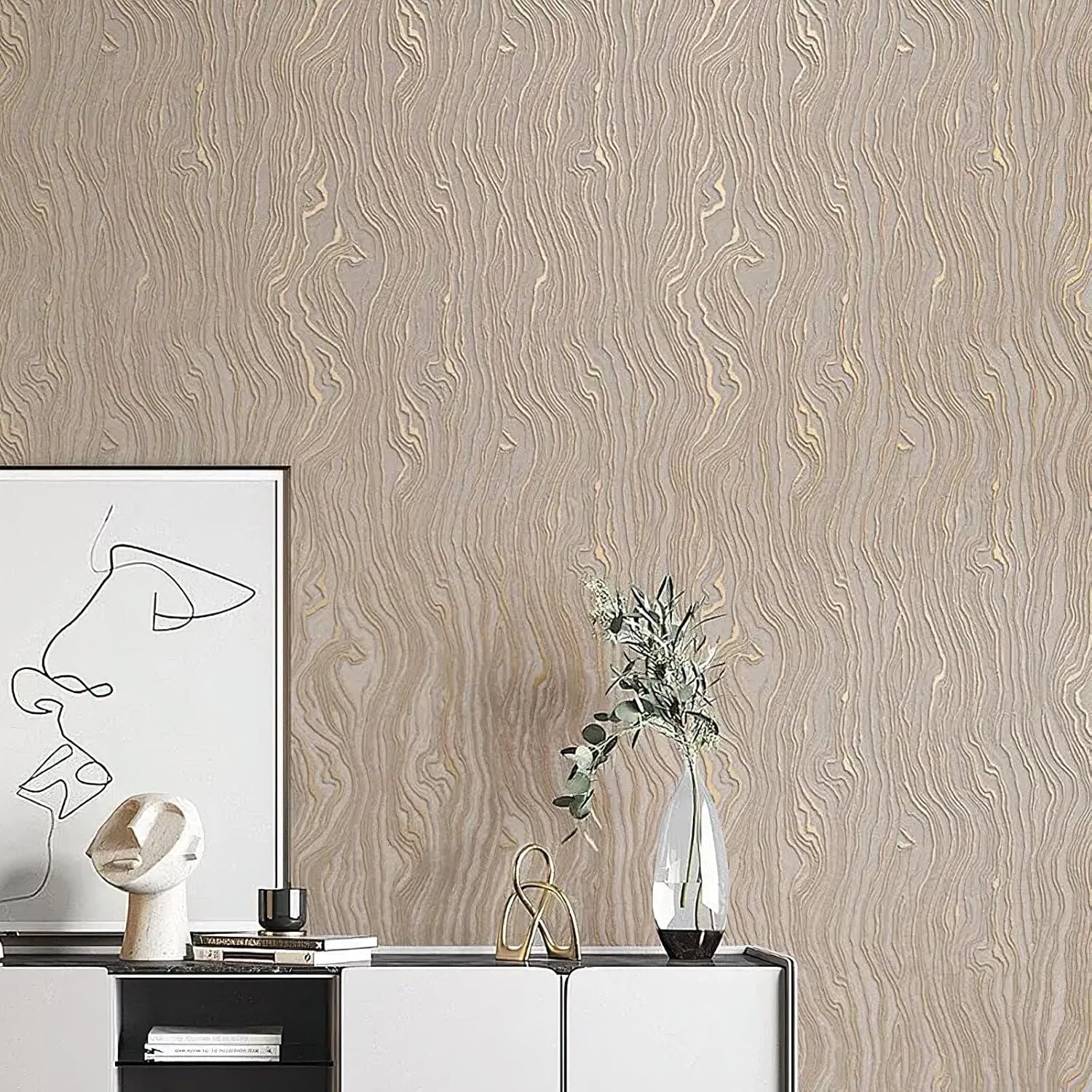
You’re staring at a bare wall in your living room — maybe a rental, maybe just a room you’ve been avoiding — and the idea of shiplap or a warm wood-grain texture is genuinely appealing. You don’t want to demo anything. You want the look, not the renovation. That’s exactly what peel-and-stick wallpaper (a self-adhesive, fabric- or paper-backed vinyl sheet that presses onto a wall and can theoretically be removed later) promises to deliver. Wood grain and faux shiplap patterns have been among the fastest-growing niches in peel-and-stick over the past two years, and the product options have multiplied fast enough that picking one has become genuinely confusing. This guide cuts through the marketing language, compares what published spec sheets actually say, and gives you the arithmetic to know exactly how many rolls you need before you buy.
| EDITOR'S PICKFUKU MON 24"x394" Black Wallpap… | Mid-tierWENMER 17.71" x 118" Brown Wood… | Budget pick[CiCiwind Peel and Stick Wallpap…](https://www.amazon.com/dp/B07NXWLNV7?tag=greenflower20-20) | |
|---|---|---|---|
| Width | 24" | 17.71" | — |
| Length | 394" | 118" | — |
| Color | Black | Brown | White |
| Price | $39.99 | $6.98 | $3.79 |
| See on Amazon → | See on Amazon → | See on Amazon → |
Why Wood Grain and Shiplap Peel-and-Stick Is a Different Calculation Than Solid Color or Floral
Most wallpaper coverage math is straightforward: multiply your wall’s height by its width, subtract doors and windows, divide by the usable square footage per roll. With solid colors or small-scale geometrics, that arithmetic is close to accurate. Wood grain and shiplap change the equation because of pattern repeat and grain direction.
A pattern repeat is the vertical distance before the printed design starts over. On a horizontal shiplap simulation — the kind that mimics those parallel overlapping boards — the “repeat” is the board height, typically 5 to 9 inches. That sounds small, but it means every new strip you cut has to be aligned so the board lines run continuously across the wall. Depending on your ceiling height, you may lose 4 to 8 inches of material per strip to alignment trimming. On a 20.5-inch-wide roll with a 7-inch straight repeat (meaning each panel matches the one next to it when shifted straight down, not diagonally), that waste is manageable. On a 24-inch-wide roll with an offset repeat — where every other strip drops by half the pattern height — you’re trimming considerably more.
Grain direction is the second variable most listings don’t flag clearly. Vertical wood grain (planks running floor-to-ceiling) is forgiving: one strip reads like one plank, and most buyers find alignment intuitive. Horizontal grain — which mimics long reclaimed boards running wall-to-wall — requires the strips to be hung in a specific top-to-bottom sequence and positioned so the grain flows continuously across seams. Misread the spec sheet on grain direction and you’ll hang three strips before realizing they need to be rotated 90 degrees.
The practical upshot: always confirm grain direction and repeat type before you order, and add a 15 percent waste buffer to any wood-look or shiplap project, versus the 10 percent buffer that works fine for solid patterns.
Reading the Spec Sheet: What the Numbers Actually Mean
Here’s what a typical product listing tells you and what it obscures.
Roll dimensions vary more than you’d think. The residential peel-and-stick market in 2026 has no enforced standard width. Common widths are 17.7 inches, 20.5 inches, and 24 inches. Lengths run from 9.8 feet (a three-meter roll) up to 16.4 feet (five meters) and occasionally to 33 feet on contractor packs. A 17.7-inch-wide by 9.8-foot-long roll gives you about 14.4 square feet of material — but usable square footage after repeat-trimming on a shiplap pattern with a 6-inch repeat and 9-foot ceilings can drop to roughly 11 to 12 square feet. The listing says “covers approximately 14 sq ft per roll.” Your real coverage is closer to 12. On a 50-square-foot accent wall, that’s the difference between ordering four rolls and ordering five.
Substrate claims need translation. Most peel-and-stick wood grain products on the mass market use a PVC (polyvinyl chloride) face with a fabric or paper carrier and a repositionable acrylic adhesive. “Fabric-backed” typically means a non-woven polyester mat bonded behind the PVC layer — this is what gives a product more dimensional stability and reduces the tearing risk during repositioning. “Paper-backed” products are cheaper to produce, more prone to tearing on removal, and generally less forgiving on textured walls. Neither the RoomMates nor Tempaper spec sheets use the term “Type II vinyl” — that designation, defined by the Wallcovering Association’s WA-101 standard, requires a minimum 13-oz-per-linear-yard weight and specific abrasion and tear resistance thresholds. Residential peel-and-stick products almost never meet that bar. Know that going in: these are decorative, not architectural-grade, wallcoverings.
Removability language is marketing, not a warranty. Published claims like “removes cleanly for up to X years” are typically based on application to freshly painted, properly primed, flat or eggshell-finish drywall. Apartment Therapy’s research notes, and the pattern holds across aggregated owner reviews: removal success drops sharply on walls with matte paint, older drywall with patches, or surfaces that haven’t been painted in three or more years. If you’re in a rental with unknown paint history, that “removes without damage” claim is optimistic.
By the Numbers: Accent Wall Coverage Snapshot
| Roll Spec | Roll Width | Roll Length | Gross Sq Ft | Est. Usable Sq Ft (shiplap, 9-ft ceiling) | Rolls for 50 Sq Ft Wall |
|---|---|---|---|---|---|
| Narrow short | 17.7 in | 9.8 ft | 14.4 | ~11–12 | 5 rolls |
| Standard | 20.5 in | 16.4 ft | 28.0 | ~22–24 | 3 rolls |
| Wide | 24 in | 16.4 ft | 32.7 | ~26–28 | 2–3 rolls |
Estimates assume a 6-inch straight-match repeat and one 4-inch trim cut per strip. Add 15% waste buffer for offset-match patterns.
Brand-by-Brand Spec Comparison: Where the Differences Are Real
RoomMates sits at the accessible end of the market ($12–$25 per roll at retail). Their wood-grain and shiplap SKUs — the lines have expanded considerably since 2024 — use a PVC face on a repositionable adhesive carrier. Published roll dimensions on their current shiplap line run 20.5 inches wide by 18 feet long, giving roughly 30.7 gross square feet. The pattern repeat on the shiplap variants is listed at 6.3 inches, straight match. Owners in aggregated reviews consistently call the adhesion “strong enough to stay but easy to reposition during hang” — which tracks with what the Tempaper and This Old House installation guides describe as the target behavior for repositionable acrylic adhesives. The consistent complaint in long-term owner reports: edges lift in high-humidity rooms (bathrooms, kitchens adjacent to steam) after 12 to 18 months.
Tempaper operates a tier up ($35–$55 per roll). Their wood-effect and grasscloth-adjacent patterns — the shiplap-literal offerings are limited in their current lineup — use what their published materials describe as a thicker PVC substrate with what they call a “duo adhesive” system, intended to bond more firmly over time while still releasing cleanly from properly primed surfaces. Architectural Digest’s 2025 roundup of peel-and-stick options specifically called out Tempaper’s substrate thickness as above-average for the residential category. Roll specs on their standard line run 20.5 inches by 16.5 feet (approximately 28 square feet gross). Their pattern repeat documentation is notably cleaner than many competitors — the spec pages list both repeat height and match type, which saves you a guessing step.
Walls Need Love and Chasing Paper (mid-tier, $30–$50 per roll) both offer wood-grain patterns with more design-forward aesthetics than the commodity shiplap market. Published specs vary by SKU, so confirm dimensions for your specific pattern — roll width ranges from 20.5 to 24 inches across their lines. Chasing Paper’s installation documentation, which This Old House has referenced as among the more thorough in the category, explicitly addresses grain-direction hanging order, which is unusual and useful.
Spoonflower custom prints occupy the premium DIY tier ($60+ per panel depending on substrate choice). If you have a specific wood-grain illustration or want a shiplap pattern scaled to your exact board dimensions, Spoonflower’s peel-and-stick substrate (their “Peel and Stick Fabric” option) allows fully custom sizing. The tradeoff: their substrate is fabric-face rather than PVC-face, which changes the texture and sheen considerably. Owner reports suggest it reads more matte and textile-like than commodity vinyl shiplap, which may or may not match your intent. Coverage math is exact because you order to size, eliminating the repeat-waste problem entirely — a meaningful advantage on complex walls.
The Decision Framework: Which Roll for Which Situation
You’ve done the math and you know which specs matter. Here’s the if/then:
If your wall is under 50 square feet and you’re in a rental with unknown paint history: prioritize a fabric-backed substrate from a brand with documented repositionability (Tempaper or RoomMates over store-brand alternatives), order one extra roll beyond your calculation, and test adhesion on a hidden corner before committing the full hang. The extra roll costs less than a security deposit dispute.
If your wall is 50 to 100 square feet and you want horizontal shiplap specifically: the wide-roll options (24 inches) meaningfully reduce your seam count, which is the primary visual risk with horizontal patterns. Fewer seams means less chance of the grain line breaking at an obvious vertical interval. Calculate using the conservative (lower) usable square footage figures and order accordingly.
If you’re designing a feature wall in a short-term rental property or hospitality space: residential peel-and-stick is not rated to the durability thresholds of Type II commercial vinyl as defined by Wallcovering Association standard WA-101. For a room turning over guests regularly, the adhesion cycle (apply, remove, reapply) that STR operators sometimes attempt is not what these products are engineered for. Commercial-grade removable wallcoverings from MDC Wallcoverings or Innovations in Wallcoverings are a different category entirely — more expensive upfront, but specced for exactly that use case.
If you want exact coverage with zero waste math and have flexibility on texture: Spoonflower custom sizing eliminates the repeat-waste variable completely. For a wall with unusual dimensions, dormers, or built-ins that create complex cutouts, the per-panel custom order may cost less overall than buying extra commodity rolls to cover the waste margin.
If budget is the primary constraint and the wall gets low traffic: RoomMates’ current shiplap line offers the best gross-square-footage-per-dollar in the category based on published retail pricing. Accept the thinner substrate and the humidity caveat, hang on a properly prepared flat or eggshell wall, and the result owner reviewers consistently describe as “much better than the price suggests” holds up — on the right wall, in the right room.
The spec sheets are telling you the truth. You just have to know which numbers to read.