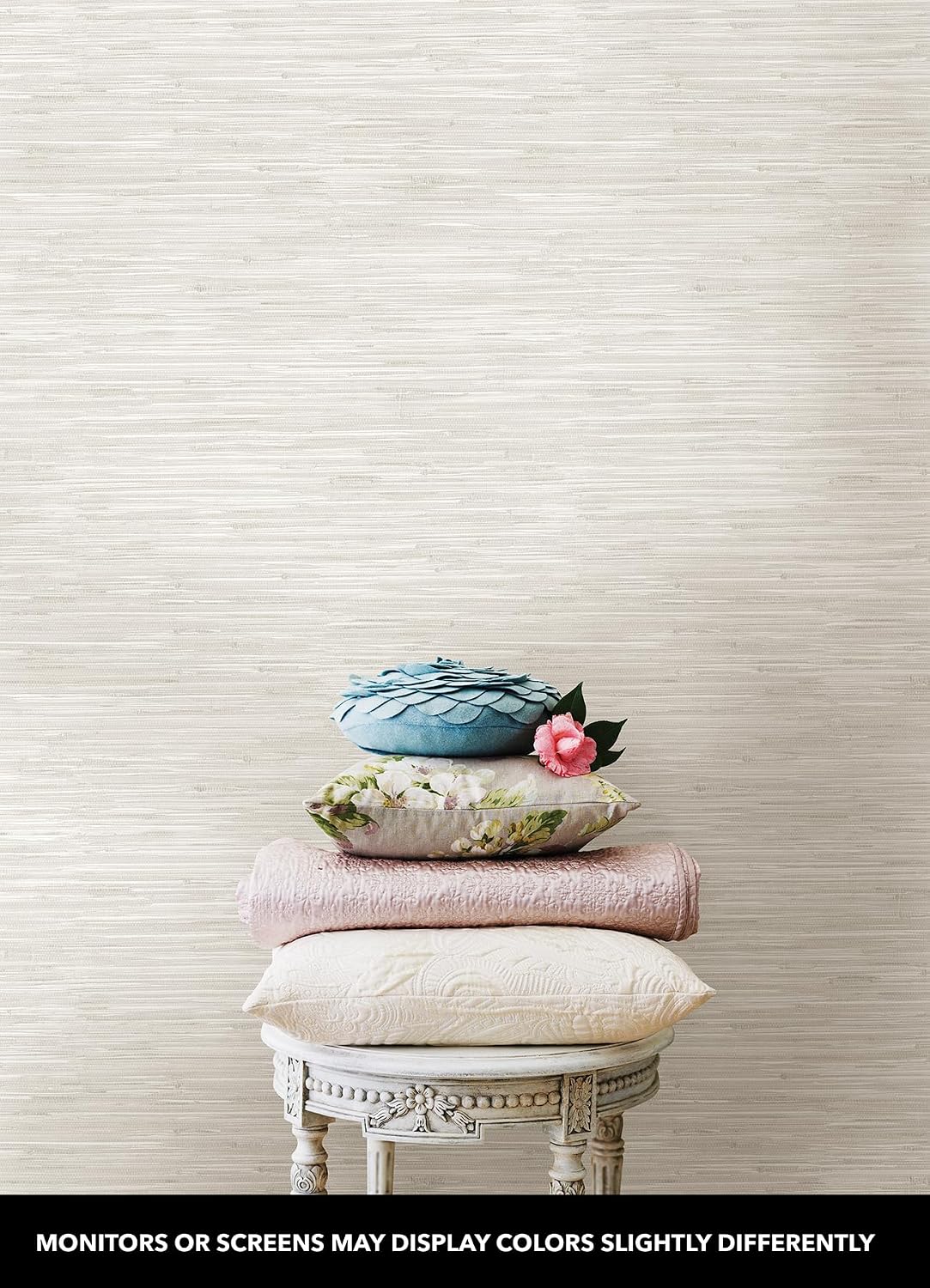
You’ve seen NuWallpaper by WallPops in every big-box aisle and on every renter-friendly design list. The pitch is straightforward: a peel-and-stick wallpaper (meaning it uses a pressure-sensitive adhesive backing so you don’t need paste or water — just press and go) that you can remove without damaging the wall underneath. For renters, that “removable” promise is the entire value proposition. For practitioners sourcing product for a client with a lease clause, it’s the line item that either clears legal review or blows up the spec. What this article does is hold NuWallpaper’s published spec sheets up to the light and compare them against what the brand actually claims — roll by roll, SKU by SKU — so you can decide whether the product belongs in your next project or your past one. By the end, you’ll have a clear decision rule rather than a vague impression.
| EDITOR'S PICK[Magnolia Home by York Wallcover…](https://www.amazon.com/dp/B0CDPYVS8X?tag=greenflower20-20) | Mid-tier[NuWallpaper by WallPops Cream V…](https://www.amazon.com/dp/B07PFFY85T?tag=greenflower20-20) | Budget pick[NuWallpaper by WallPops NUS3144…](https://www.amazon.com/dp/B07RBND6P3?tag=greenflower20-20) | |
|---|---|---|---|
| Roll Size | 20.5-in x 20-ft | — | — |
| Material | Non Woven | Vinyl | — |
| Pattern | Heirloom Rose | Cream Vinyl Grassweave | Breezy |
| Color | Grey and White | Cream | Grey |
| Price | $42.49 | $33.42 | $26.39 |
| See on Amazon → | See on Amazon → | See on Amazon → |
What NuWallpaper’s Spec Sheets Actually Promise
NuWallpaper sits inside the WallPops brand family, which is owned by Brewster Home Fashions — one of the longer-standing North American wallcovering distributors. The NuWallpaper line is positioned as the “premium” tier within WallPops, sitting above the basic WallPops geometric peel-and-stick tiles but well below Brewster’s traditional paste wallpaper lines.
Per WallPops’ official product listings accessed in May 2026, the standard NuWallpaper roll spec is:
By the numbers:
- Roll size: 20.5 inches wide × 18 feet long (approximately 30.75 sq ft per single roll)
- Pattern repeat: varies by SKU — straight match (no offset needed) or drop match (every other strip shifts down by half the repeat height)
- Coverage claim: approximately 28 sq ft usable per roll, accounting for standard trimming waste
- Surface compatibility listed: smooth painted drywall, primed surfaces; NOT recommended for textured walls, fresh paint under 30 days, or wallpaper over wallpaper
The 28 sq ft usable figure matters because it’s the number most practitioners need for ordering math. A drop match pattern — where you align strips by shifting every other one down, which creates a more naturalistic, staggered design — will always eat more material than a straight match. NuWallpaper’s own spec sheets acknowledge this only by listing the repeat measurement; they do not explicitly calculate the additional waste percentage per SKU. That’s a gap worth flagging.
The pattern repeat across the NuWallpaper catalog ranges from 0 inches (seamless textured SKUs like their brick and grasscloth simulacra) to roughly 20.5 inches on larger botanical prints. A 20.5-inch drop match repeat on a 20.5-inch-wide roll means nearly every strip loses half its repeat height to matching — potentially 10+ inches per strip. On an 8-foot ceiling, that’s meaningful. Run the math before you order.
Where the Product Line Holds Up — and Where It Doesn’t
Substrate and Print Durability
NuWallpaper uses a vinyl-coated paper substrate across the vast majority of its catalog. This is not Type II vinyl (the commercial-grade wallcovering rated for high-traffic and wet areas per standards published by the Wallcovering Association) — and it was never meant to be. The relevant comparison is to other consumer-tier peel-and-stick products, not to architectural specification grades.
Within that consumer tier, reviewers at This Old House and House Beautiful both note that NuWallpaper’s surface holds up to light wiping with a damp cloth, which aligns with WallPops’ published “wipeable” claim. What the spec sheet does not quantify is any abrasion rating or washability cycle count — categories that Type II products are required to publish. For a bedroom accent wall or a rental bathroom backsplash, the omission is acceptable. For a high-traffic hallway or a commercial application, it’s a dealbreaker.
The print layer on NuWallpaper SKUs is UV-sensitive. WallPops does not publish a lightfastness rating (a measure of how resistant a print is to fading under light exposure) for NuWallpaper. Apartment Therapy’s coverage of peel-and-stick wallpaper roundups consistently flags this as a category-wide gap — most consumer peel-and-stick brands skip the spec, and NuWallpaper is no exception. If your project wall gets four-plus hours of direct sun daily, that’s a meaningful unknown.
The Removability Claim — Spec vs. Reality
“Removable and repositionable” is the centerpiece of NuWallpaper’s marketing. The spec sheet language is careful: WallPops states the product is designed for removal from properly prepared painted surfaces but does not offer a written guarantee against paint pull. The distinction matters legally and practically.
What aggregated owner reviews show — across Houzz community threads and the Apartment Therapy comment pools — is a consistent pattern: removal from surfaces with well-cured (60-plus days old), high-quality eggshell or satin latex paint tends to go cleanly. Removal from flat paint, paint under 30 days old, or already-compromised wall surfaces produces varying rates of paint damage. This aligns exactly with what WallPops’ own application instructions say, but buyers regularly skip those instructions.
The practitioner takeaway: the spec sheet is honest, but only to readers who parse application prerequisites. If you’re speccing this for a rental client, document the wall prep condition before application and include it in your file. If the landlord repainted with flat-finish paint in the last month, NuWallpaper is not your safe harbor.
Roll Dimensions and the Ordering Math Problem
NuWallpaper’s listed 20.5-inch width is consistent across the catalog, but the 18-foot roll length has generated a thread of complaints on Houzz from practitioners who note that the usable length after trimming the leading and trailing edge selvage (the unprinted border strip at each end of a roll) can run slightly shorter than expected. WallPops does not publish a specific selvage trim allowance in the spec sheet.
Industry convention on consumer peel-and-stick, per This Old House’s installation guidance, typically assumes 6–12 inches of combined trim waste across a roll’s length. On an 18-foot roll, that’s a 3–6% reduction in usable yield — small on a 2-roll order, compounding fast on a 20-roll project.
Practitioner ordering rule of thumb: Use 27 sq ft as your per-roll working figure, not 28, and add one buffer roll per every 6 rolls ordered on drop-match SKUs. NuWallpaper’s own “how many rolls do I need?” calculator on the WallPops website does not apply this drop-match adjustment automatically.
SKU-Category Breakdown: Which Collections Pass Their Own Spec Test
The NuWallpaper catalog organizes into roughly five product families. Here’s how each holds up against its own stated claims:
Textured Simulation SKUs (brick, grasscloth, shiplap) These are straight-match (0-inch repeat) products, which means the ordering math is the simplest in the catalog. Published coverage claims are most reliable here. Owner reviews across Apartment Therapy’s roundups and Houzz threads consistently report clean installation and removal. These SKUs overperform their price point. Best candidate for a practitioner’s low-risk recommendation to budget-conscious clients.
Botanical and Floral Prints The higher-repeat SKUs in this category (16–20.5 inch drop match) are where spec-to-reality gaps appear. The pattern registration — how precisely each strip aligns to its neighbor — draws mixed owner feedback, with some reviewers noting that the print alignment drifts slightly over long wall runs. WallPops publishes no tolerance spec for registration variance, which is an omission. House Beautiful’s coverage notes that peel-and-stick products generally require more careful strip-by-strip alignment than paste wallpaper; NuWallpaper is not uniquely bad here, but the gap is real.
Geometric and Abstract Prints Straight or half-drop matches, moderate repeat heights. Owner satisfaction rates are high in aggregated reviews. These SKUs behave predictably against their spec sheets.
Faux Finish / Marble / Stone Simulation NuWallpaper’s marble-look SKUs get consistent positive reviews for visual effect at the price point, but owners on Houzz flag that seam visibility is higher on these SKUs than on textured or botanical prints — because the continuous tone of a marble simulation makes misalignment more obvious to the eye. The spec sheet does not address seam visibility. It’s worth flagging to clients before they order.
Panel / Mural Format SKUs WallPops offers a small selection of NuWallpaper mural-format products — pre-cut panels rather than rolls. Coverage claims are more straightforward here since there’s no pattern repeat math. Removability reviews are consistent with the standard line. These work well for accent walls where a single visual statement is the goal.
The Honest Comparison: NuWallpaper vs. Its Direct Competitors
NuWallpaper’s primary competition in the practitioner-accessible tier is RoomMates (also by York Wallcoverings) and Tempaper. Per published specs as of May 2026:
- RoomMates rolls run the same 20.5-inch width but vary in length by collection; their spec sheet transparency on repeat type is comparable to NuWallpaper’s.
- Tempaper publishes slightly more explicit surface preparation language and offers a thicker substrate on select collections, which owners in Apartment Therapy’s review pool associate with easier repositioning during installation.
- NuWallpaper’s catalog breadth — particularly in the textured simulation category — is a genuine competitive advantage. Grasscloth and brick simulacra are SKU categories where NuWallpaper has more options than most direct competitors at this price tier.
Where NuWallpaper lags: it does not publish a lightfastness rating, does not specify a selvage allowance, and does not auto-adjust its roll calculator for drop-match waste. None of these are disqualifying for the right application — but they’re gaps a practitioner needs to close manually rather than trusting the spec sheet to handle.
If X, Then Y: The Decision Rule
If your client has a smooth, well-cured painted wall, a rental lease, and a budget under $50 per roll: NuWallpaper’s textured simulation SKUs are a defensible spec. The removability track record is consistent with published claims when surface prep is correct.
If the project involves a drop-match botanical or large-scale print: Add one buffer roll per 6 ordered, verify the repeat height yourself against the SKU spec sheet, and brief your client on seam visibility expectations before installation begins.
If the wall sees direct sunlight more than 4 hours daily, or the paint is flat-finish or under 30 days old: Remove NuWallpaper from contention. The spec sheet’s own application prerequisites disqualify it, and the removability promise does not survive those conditions.
If the project is commercial, high-traffic, or requires any published abrasion or washability rating: NuWallpaper is the wrong product category entirely. Step up to Type II architectural vinyl from Koroseal, MDC Wallcoverings, or Innovations in Wallcoverings, where the spec sheet publishes the numbers you actually need.
NuWallpaper’s catalog is largely honest about what it is. The practitioner’s job is to read the fine print, close the gaps the spec sheet leaves open, and match the product to the conditions — not to the marketing headline.